Auction Buying
What a Quick Walk-Around at the Auction Yard Can't Tell You
A quick yard walk-around can't show how a car runs, its frame, flood damage, or wiring. Here's what to check before you bid.
What breaks on 2011–2019 Explorers, what it costs to fix, and how to spot each problem on an auction lot before you set your max bid.
On a 2011–2019 Ford Explorer, check five things before you bid. Look for coolant in the oil (the 3.5L V6 water pump sits inside the engine). On AWD trucks, check for a leaking or cooked power transfer unit. Make sure the rear toe-link recalls are closed. Watch for exhaust smell in the cabin, especially on rear-hit trucks. And look for bubbling paint on the aluminum hood. Of the five, the water pump has the most power to wipe out a cheap buy, so start there.
This is the fifth-generation Explorer, the unibody truck on Ford's D4 platform built at Chicago Assembly from December 2010 to March 2019. Explorers in this range land at Copart and IAA all the time, both civilian trucks and the Police Interceptor Utility version, so it pays to know the failure list cold.
Decode the VIN before anything else. The fifth gen came with:
Every one of them runs a 6-speed automatic. Drive type matters as much as engine: AWD trucks carry the power transfer unit covered below, and FWD trucks don't.
This is the big one. On the naturally aspirated 3.5L V6 (and the 3.7L in the police trucks), the water pump sits behind the timing cover and the timing chain drives it. When the pump's seal goes, coolant doesn't drip on the ground. It runs into the engine oil.
Coolant in the oil kills bearings fast. If the owner kept driving, you're buying an engine, not a water pump.
Caught early, it's still expensive because the timing side of the engine has to come apart. Published shop quotes run roughly $2,000 to $4,500 for the pump job (as of October 2026), and owners have posted bills well past that once the engine was hurt. There's no recall on it.
What to check at the yard:
If the oil is milky, bid it as a parts car or engine swap, not a runner. Used 3.5L engines are easy to find through Car-Part.com and the big yards. Just know the replacement has the same pump inside it.
On AWD Explorers, the PTU sends power to the rear driveshaft. It sits right next to the exhaust and catalytic converter and holds only about half a quart of gear oil. Ford sold it as lifetime fill, with no dipstick and no drain plug. The heat cooks the oil, the seals start leaking, and eventually the gears go.
Signs on the lot:
A seal job caught early runs about $200 to $500. A full PTU replacement runs roughly $2,000 to $3,100 (as of October 2026). If you buy one and keep it, change the PTU fluid regularly. Owners and parts sellers suggest about every 30,000 miles.
The rear toe links on this truck have been recalled more than once, and the recalls are still going.
With fall here and salt trucks about to roll in a lot of the country, a salt-belt Explorer with an open toe-link recall is worth checking twice.
What to do:
NHTSA spent six years on complaints about exhaust odor and carbon monoxide in 2011–2017 Explorers, more than 6,500 complaints in all. The agency closed the case in 2023 without a recall. Stock trucks, measured correctly, came in under accepted health limits.
The part that matters at auction is where the highest levels came from. NHTSA traced them to sealing problems from police upfitting and, in consumer trucks, from rear crash damage. Ford also ran a service action (17B25) that resealed police trucks and added exhaust downturns.
So a rear-hit Explorer is the one most likely to pull fumes into the cabin after it's fixed. On any rear-damage truck:
See how to judge a truck you can't drive for what you can learn from photos and a yard walk when you can't take it out.
Explorer hoods are aluminum, and they're known for paint bubbling and flaking, usually starting along the front edge and the perimeter. Ford put out several service bulletins on it for 2000–2017 Explorers, including TSB 17-0062 in August 2017, which told dealers to replace corroded aluminum panels. A 2019 class-action suit over it was dismissed in 2021.
It doesn't affect how the truck drives, but it hurts resale. Buyers see a bubbling hood and assume the whole truck is rotten. Budget for a used hood in good paint or a refinish. Hail on an aluminum hood is its own question; hail vs. wrecked trucks covers that math.
The 6-speed automatic in these trucks has plenty of owner complaints about shudder and harsh or hesitant shifts. The usual suspects are the torque converter and the shift solenoids, and Ford put out software updates for some of it. How common real failures are is hard to pin down from good sources, so treat it as a check, not a deal-breaker:
Retired PIUs show up at auction all the time, cheap. They use the 3.7L V6 (or EcoBoost in some), which has the same internal water pump issue, and they spent their lives idling. That wear doesn't show on the odometer. Upfit holes in the body and roof are what caused the worst exhaust-odor readings, so check that every hole is sealed. Price a PIU as a work truck, not a family SUV.
Then put the water pump or PTU risk into your max-bid sheet as a real dollar line. A V6 Explorer that needs a $3,000 pump job isn't a cheap truck anymore. If you're also pricing Ford pickups, the F-150 checklist works the same way.
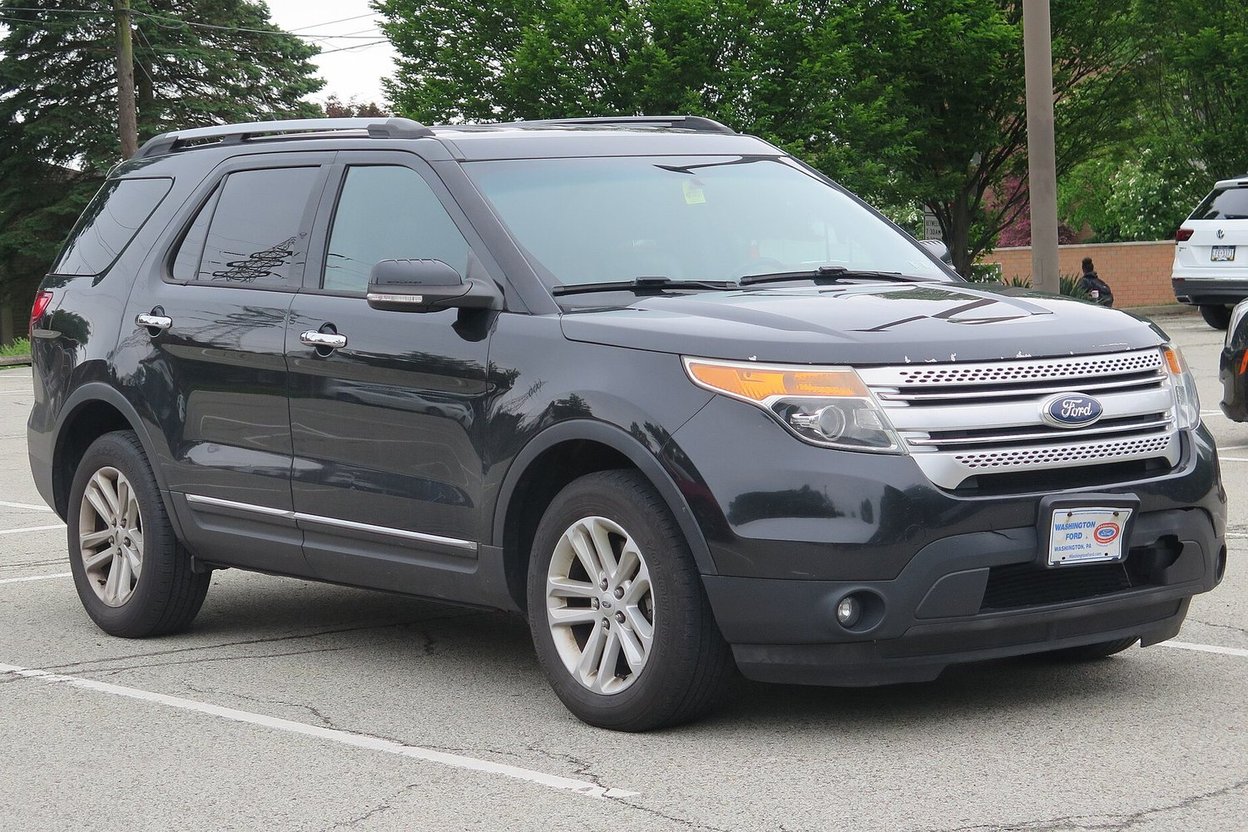
Photo: 2015 Ford Explorer XLT in Tuxedo Black Metallic, front right, 05-20-2026 by Cutlass, CC0.
A quick yard walk-around can't show how a car runs, its frame, flood damage, or wiring. Here's what to check before you bid.
Copart lost your title and the DMV rejected your bill of sale? Here's what to ask for, what to get in writing, and the backup routes.
A Copart 'Front End' label doesn't say what hit the vehicle. Get the photo clues, the hidden deer-hit damage, and how to size the repair before you bid.