Auction Buying
What a Quick Walk-Around at the Auction Yard Can't Tell You
A quick yard walk-around can't show how a car runs, its frame, flood damage, or wiring. Here's what to check before you bid.
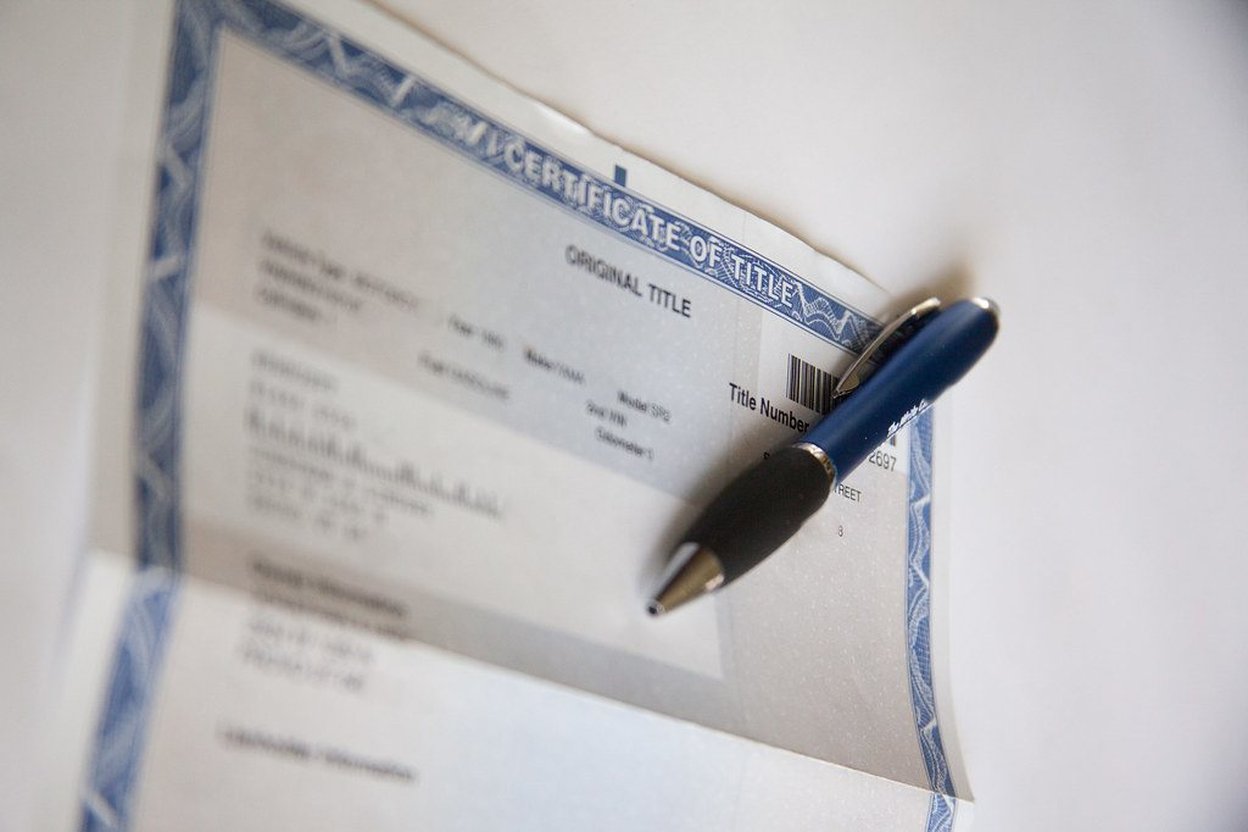
Copart lost your title and the DMV rejected your bill of sale? Here's what to ask for, what to get in writing, and the backup routes.
The car is paid for, it's been sitting for two months, and the DMV clerk just slid your bill of sale back across the counter. Here's why: a bill of sale proves you paid. It doesn't prove the seller owned the car, and it doesn't prove the state ever released it. You need an ownership document. That's either the title, a certificate of sale the state will accept, or a backup route like a bonded title or a court order. Below is what to ask for, what to keep in writing, and what each backup costs you in time and money.
This isn't one documented case. It's a pattern that comes up a lot with auction cars: the buyer pays, the paperwork stalls, and the buyer assumes the receipt will carry them. It won't. A bill of sale matters in most states because it shows the price and shows that a transfer happened. It matters even more when the title is missing, because you'll need it to start a bonded-title application. But it doesn't replace a title.
Before you do anything else, I'd check two things.
First, which document Copart actually issued. There are three possibilities:
Second, what brand the car carries. Clean, salvage, rebuilt, non-repairable, parts only. That brand decides which backup routes are even open to you. In Texas, for example, a car that's considered junked or non-repairable can't get a bonded title at all.
One insurance FAQ site (not Copart itself) says the auction has up to 30 days from the sale date to issue the title. It says that if the document has to be processed through the state, that can add another 2 to 6 weeks. The same site says "Title Pending" means the title hasn't reached the yard where the car is stored yet.
Once the state has the paperwork, a standard title can take anywhere from a few days to several weeks. A brand-new title can take a couple of weeks to over a month, depending on the state.
Do the math: 30 days plus up to 6 more weeks is roughly 72 days in the worst case of a slow state-processing title. So 60 days isn't automatically a disaster if your title is in that state-processing bucket. But if the car is a straight Copart title with no state processing, 60 days is well past the window. Either way, by day 60 you should know why it's late, not just that it's late. That's my reading of those numbers, not a Copart promise. Check the status and current terms in your own Copart account, because that's where the real numbers for your lot are.
If you bought in late summer, the clock is now running into Thanksgiving. That's long enough that "just wait" isn't a plan anymore.
Phone calls disappear. Get everything in writing, starting now.
Write to Copart. Use the messaging in your account or email, not just the phone. Ask three specific questions:
Keep a log. Write down the date, who you talked to, what they said, and any case or ticket number. It's boring, but it's what you'll show the DMV, the consumer office or a judge if this drags on.
Get the DMV's refusal in writing. Ask the clerk to note the reason or give you a rejection slip. "No title" and "lien not released" are different problems with different fixes. For lien-sale vehicles, for example, the DMV can refuse a title if the seller's notice paperwork wasn't completed properly. That's a problem upstream of you, and you need it named.
If Copart goes quiet, contact your state DMV's title or investigations section, or your state attorney general's consumer protection office. Send them your log, the invoice, the bill of sale and the DMV's written refusal. A complaint with documents gets read. A complaint without them is just a story.
If the original title really can't be recovered, these are your options. Which one fits depends on your state and the car's brand.
The auction or salvage certificate route. This is the cheapest and fastest. If your state accepts the auction's certificate of sale for a salvage or rebuilt title, push Copart for that document instead of waiting on a lost title.
California's version. When a car reported sold as salvage has no regular title available, California requires a motor vehicle bond. The bond equals what the insurer paid the owner plus what the salvage buyer paid. The DMV's own example: a $2,100 insurance payoff plus $300 paid at auction makes a $2,400 bond. The way out is the insurance company. California doesn't require the bond if the insurer submits an acceptable REG 492 Unobtainable Title Certification. Since the car came off an insurance total, ask Copart to get the insurer to file one. It can save you from buying a bond at all.
Bonded titles in general. These are slow. Expect several months to over a year, often including a waiting period while the DMV advertises for any previous owner or lienholder. The bond typically runs 1.5 to 2 times the car's estimated value. You don't pay the full bond amount. You pay a surety company a premium for it, so get a quote before you count this as cheap. The title comes marked "bonded." After about three years with no claims, you may be able to convert it to a clear title. Roughly a dozen states, including New York, Hawaii and Pennsylvania, don't offer bonded titles at all, so there your route is a court order.
Texas's version. In Texas you have to be a resident (or military stationed there), and the car has to be in your possession. It also has to be complete, with frame, body and motor, and it can't be junked or non-repairable. You file Form VTR-130-SOF at a TxDMV Regional Service Center with your bill of sale, photo ID and a $15 fee. If you're approved, you get a notice stating the bond amount, which is 1.5 times the vehicle's value. You then have one year to buy the bond and 30 days after that to apply at your county tax office. The catch is liens: if there's a recorded lien 10 years old or newer and you can't get a release or a letter of no interest, you aren't eligible. Then it's a lawyer and a court order awarding you ownership free and clear.
Court orders. These are the slowest and usually the most expensive, because you're paying a lawyer. Use this route when nothing else is open.
Ask about the title type before you bid. Read the lot's document type and brand. If it's unclear, message Copart before the auction, not after you've paid.
Budget storage and time. Storage terms are in your Copart account, and they're worth reading before you win. A car that's waiting on paperwork costs you even when you can't drive it. Plan as though the title will take the full window or longer.
Don't buy a car you can't legally title where you live. Some brands and some states shut the door completely. A cheap car you can never register isn't a deal. It's parts.
None of this means auctions aren't worth it. I'd still rather deal with a slow title than a finance office. But title trouble is one of the real ways people lose money at auction, right alongside fees and hidden frame damage. Check your own state's DMV rules before you bid, every time.
A quick yard walk-around can't show how a car runs, its frame, flood damage, or wiring. Here's what to check before you bid.
A Copart 'Front End' label doesn't say what hit the vehicle. Get the photo clues, the hidden deer-hit damage, and how to size the repair before you bid.
A $29,900 crashed Cybertruck bid is just the first line. Fees, transport, title and a Tesla-certified repair can push the real cost past its worth.