Auction Buying
What a Quick Walk-Around at the Auction Yard Can't Tell You
A quick yard walk-around can't show how a car runs, its frame, flood damage, or wiring. Here's what to check before you bid.
You can't test-drive a salvage car, and most of the time you can't even start it. How to read the photos, the run-and-drive labels, the history report and the little clues that tell you what's really wrong.
At a salvage auction, you're buying a vehicle you'll probably never drive before you own it. A lot of them don't run at all, and the ones that do get moved around the yard by a loader, not by someone behind the wheel. So the whole game is reading clues. Here's how we do it.
Every listing has a status line. Learn what each one actually promises, and what it doesn't.
These are snapshots on check-in day, not guarantees. A car that ran on the way in can have a dead battery, a fuel problem or worse by sale day. Bid accordingly.
Some listings include a short engine video. Turn the sound up and listen for knocking, ticking, or a rough idle. Watch the exhaust for smoke.
Most listings have 10 to 20 photos. Go through each one, zoomed in:
Run the VIN through a history report (Carfax, AutoCheck) and the federal NMVTIS database. Look for:
Check open recalls on NHTSA's site with the VIN, too. Open recalls can still be fixed free at the dealer, but some dealers won't work on a salvage-titled car until it's repaired.
Every model has known problems. A cheap truck with a lifter tick is not cheap. Before you bid on a common model, read up on what usually fails:
Most yards let you view vehicles in person during preview hours. You usually can't start it, but you can:
If you can't get there, third-party inspection services will go look for a fee. On a higher-dollar vehicle, that's money well spent.
When you can't drive it, assume:
Then build your maximum bid from the fixed value down. See pricing a salvage flip and how to read a Copart listing for the codes.
The buyers who make money at auction aren't the ones who find perfect cars. They're the ones who knew exactly what was wrong before they bid.
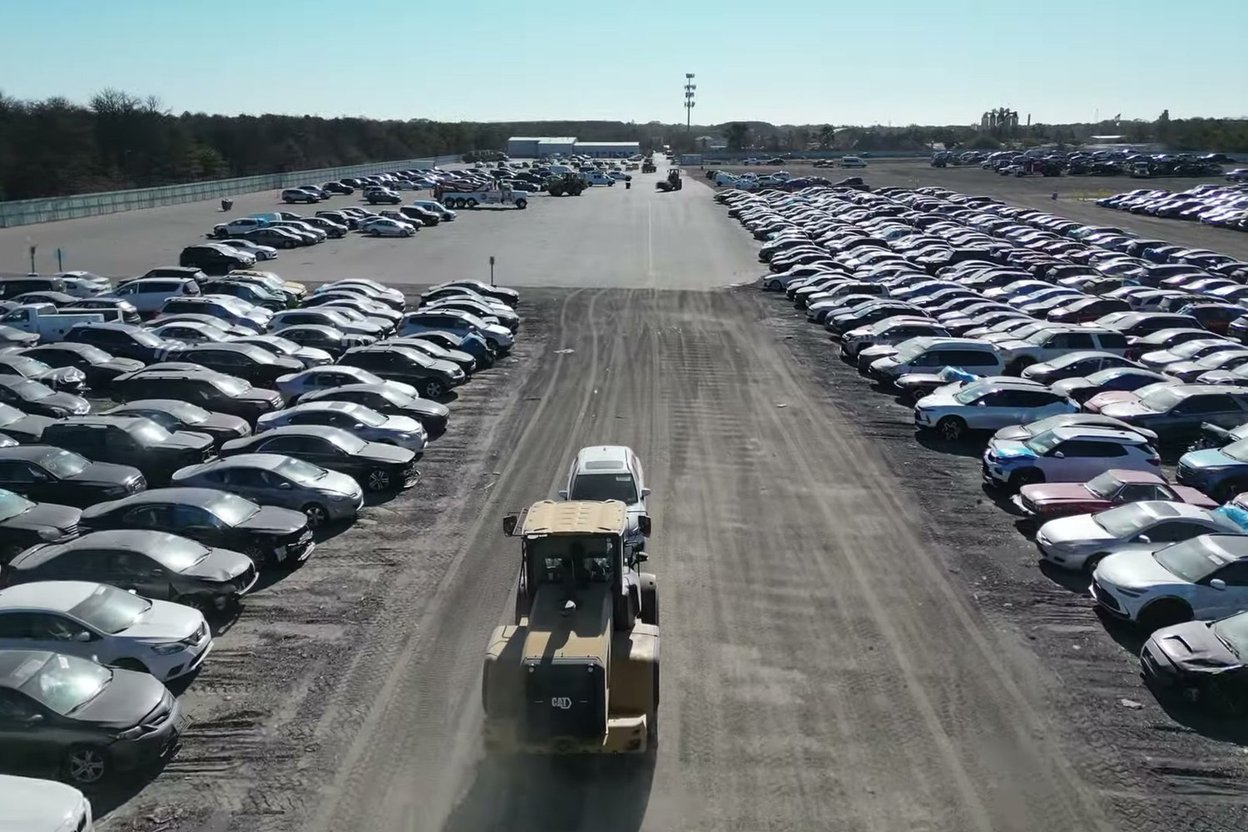
Photo: still from Copart Long Island NY, 4K drone footage by itow on YouTube.
A quick yard walk-around can't show how a car runs, its frame, flood damage, or wiring. Here's what to check before you bid.
Copart lost your title and the DMV rejected your bill of sale? Here's what to ask for, what to get in writing, and the backup routes.
A Copart 'Front End' label doesn't say what hit the vehicle. Get the photo clues, the hidden deer-hit damage, and how to size the repair before you bid.