Auction Buying
What a Quick Walk-Around at the Auction Yard Can't Tell You
A quick yard walk-around can't show how a car runs, its frame, flood damage, or wiring. Here's what to check before you bid.
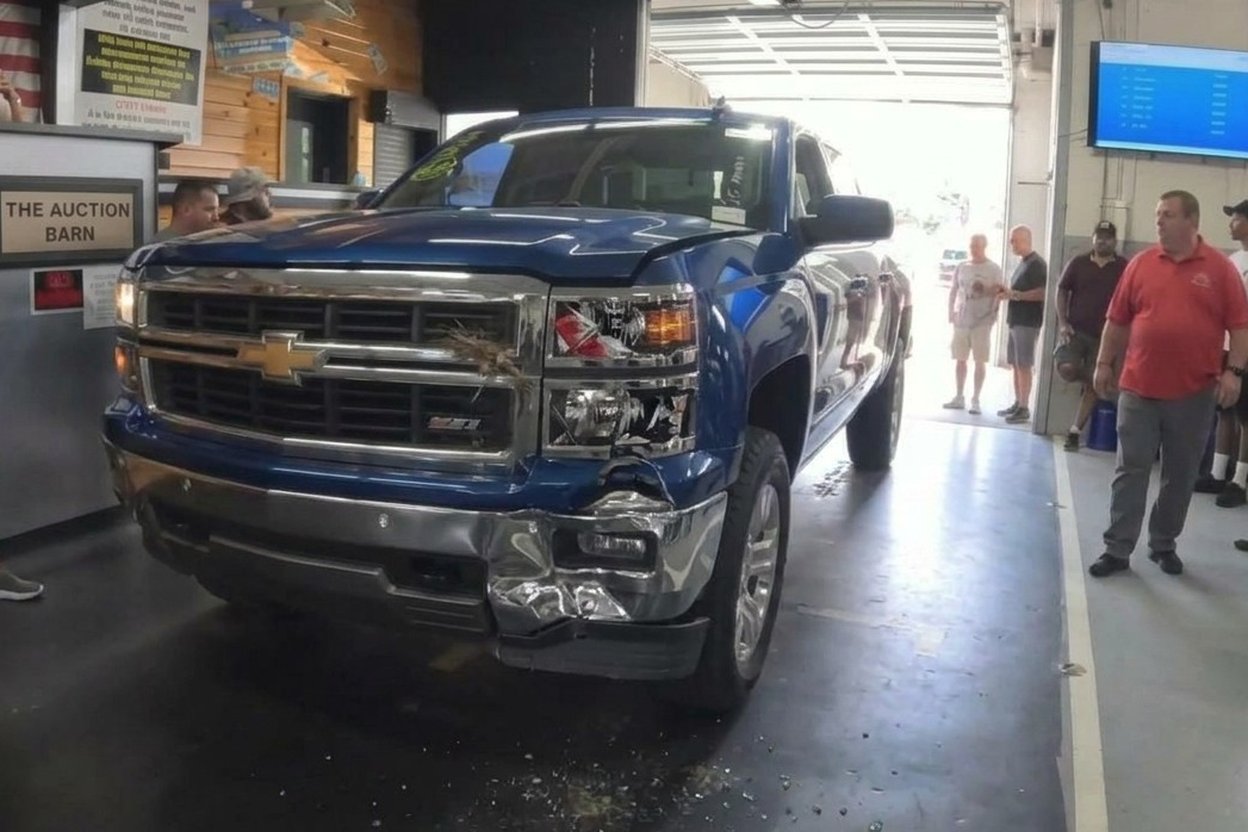
A Copart 'Front End' label doesn't say what hit the vehicle. Get the photo clues, the hidden deer-hit damage, and how to size the repair before you bid.
You're scrolling Copart on a fall evening and find a clean-looking truck at a decent price. The damage line reads "Front End," and nothing else. Your first question is whether a deer did that or another car did, because a deer sounds like the easier fix. The listing won't answer that for you. The photos can give you clues, but they can't prove anything. More importantly, it doesn't much matter what hit the truck. What matters is how far back the damage goes and what it costs to fix.
"Front End" tells you where the vehicle got hit. It doesn't tell you what hit it.
Copart's damage types, as tallied on Salvage Reseller, include Front End, Rear End, Side, Hail, Rollover, Frame Damage, Unknown and about twenty others. None of them is "animal" or "deer." So a deer strike almost certainly ends up as Front End, along with fender benders, pole hits and head-on crashes. Nothing official says that, but there's no other category it could go in.
Deer hits aren't rare. State Farm estimates more than 1.6 million animal-collision claims nationwide from July 2025 through June 2026, about $1.9 billion in claim costs, and says deer are "by far the most frequently struck animal." That number covers all animals, not only deer. Either way, plenty of deer-hit cars and trucks end up in the salvage yards.
You'll have to figure out the cause from the photos. Even then, the cause is only a clue to the extent of the damage, which is the thing you're really trying to learn.
Salvage Reseller describes a front-end lot as "Impact at the front: bumper, hood, lights, radiator area, sometimes engine accessories or frame rails." A Copart guide lists the parts that usually get hurt: bumper, hood, grille, headlights, radiator, fan, A/C, sensors and frame parts.
That means the label covers everything from a cracked bumper cover to a front end pushed back into the engine bay. Salvage Reseller says it plainly: "the photos matter more than the label." The damage code comes from the insurer and the processing step at the yard. It's where you start looking, not the answer.
Before you look closely at the damage, go through the basic listing details Copart tells buyers to check:
Copart says it posts about 10 photos per lot. That isn't a lot of pictures, so go through every one of them carefully.
These are the signs owners report after hitting a deer:
Signs of a car wreck look different:
Be careful, because none of these signs proves anything. A deer can hit a corner. A car can wreck into something tall. Hair washes off in the rain or at the car wash, and some vehicles get cleaned up before the photos are taken. Repair techs are taught to wash a panel before deciding what made a mark, so they don't mistake road grime for damage. You can't do that with auction photos.
The season can tip the odds. Deer collisions climb in October and peak in November and December, mostly at dusk and dawn. A lot that came in during late fall with damage centered on the front end is more likely a deer than the same lot in June. Late fall also means more of those vehicles are about to show up on the yards. It still doesn't prove anything.
This is where people get burned. They see a broken bumper cover and a cracked headlight, figure it was "only a deer," and bid like it's cosmetic. A full-grown deer at highway speed is a big hit, and much of the damage is out of sight behind the bumper.
Two comments from a Grassroots Motorsports thread on Copart buying are worth remembering. A longtime buyer said there's usually more damage than the pictures show. Another said deformed fender edges are a strong sign the front unibody is bent. Look closely at the line where the fender meets the hood and the door. If the gaps are uneven or the edge is wavy, assume you're bidding on structural damage. Frame Damage has its own category for a reason, and Salvage Reseller notes that some states restrict rebuilding those vehicles.
Photos only get you so far. Here's how to learn more before you put money down:
Last, Copart lists every lot as-is. After the hammer drops, whatever you missed is yours to fix.
For price and repair, mostly no. A deer can bend a radiator support or a frame rail just as easily as a Camry can. The only thing that changes your repair cost is how far the damage goes.
The title matters more than the cause. Salvage-title vehicles sell for much less, and once a vehicle is rebuilt and re-inspected it can usually be insured and registered again. The rules differ a lot from state to state, so check yours before you bid. Your odds of buying a deer hit also depend on where the vehicle came from. State Farm rates West Virginia highest at 1 in 46, then Montana, Wisconsin, Pennsylvania and Michigan. Pennsylvania had the most claims, about 141,000.
My rough rule hasn't changed. Auction price runs about a third of market, and once it's fixed the truck costs about half of a clean one. That math only works if your bid is based on the real repair bill. Bid on the damage, not on a guess about what caused it.
A quick yard walk-around can't show how a car runs, its frame, flood damage, or wiring. Here's what to check before you bid.
Copart lost your title and the DMV rejected your bill of sale? Here's what to ask for, what to get in writing, and the backup routes.
A $29,900 crashed Cybertruck bid is just the first line. Fees, transport, title and a Tesla-certified repair can push the real cost past its worth.