Auction Buying
What a Quick Walk-Around at the Auction Yard Can't Tell You
A quick yard walk-around can't show how a car runs, its frame, flood damage, or wiring. Here's what to check before you bid.
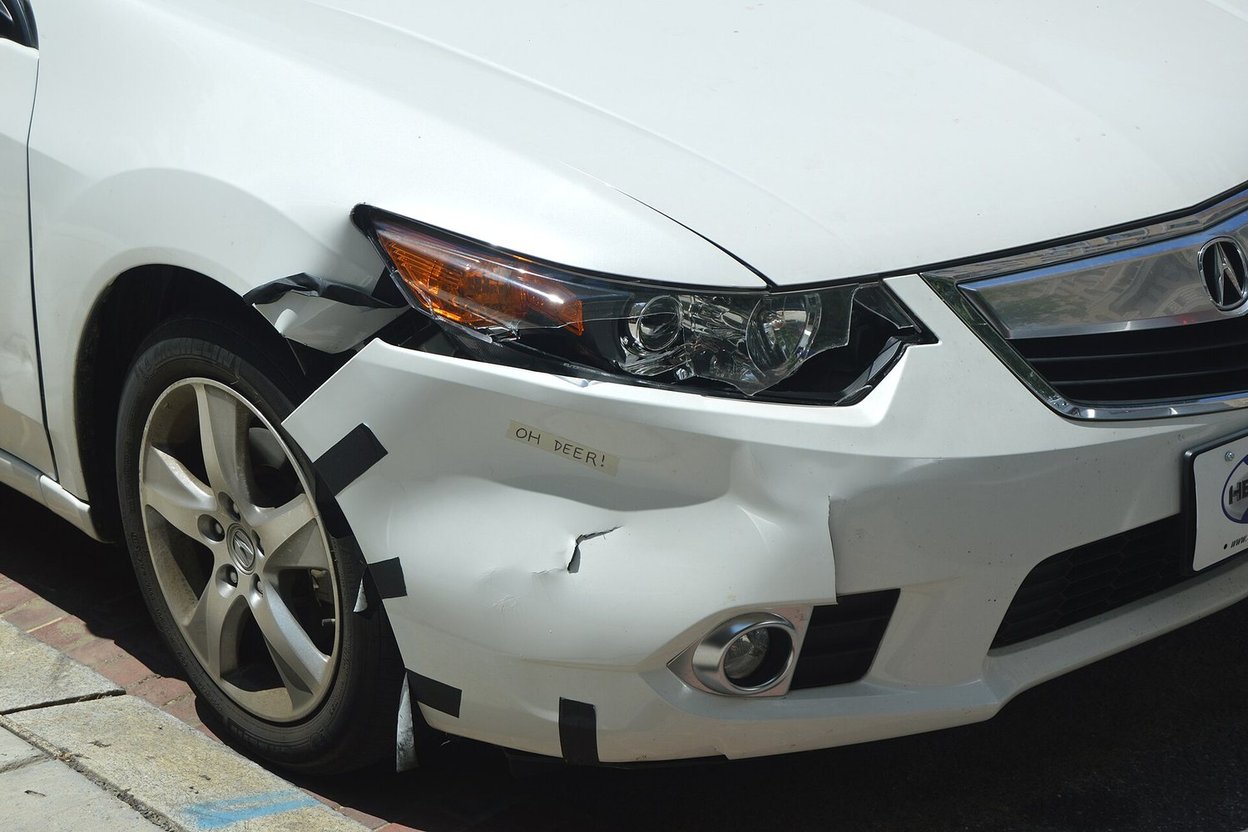
What a deer actually breaks on a car or truck, what each part runs, and how to tell a cheap bumper job from a cooked engine before you bid.
A deer-hit car usually needs a bumper cover, a grille and one or two headlights. If the hit was square, add the AC condenser and radiator. On newer vehicles there may also be a radar sensor behind the bumper that has to be replaced and calibrated. Buy the parts yourself, aftermarket or used, and a typical car or half-ton front end costs a few hundred dollars to a couple thousand. Price the same job through a shop with new OEM parts and it can top $4,000 before anyone looks at the hood or the fenders.
The front end is the part you can see in the photos, so it isn't the real risk. The real risk is whether someone drove the car home with a hole in the radiator.
October through December is deer season on the road. State Farm's numbers for July 2024 to June 2025 put about 650,000 animal-collision claims in those three months. That was 41% of the year's total. November is the worst month, then October, then December.
State Farm's newest figures, for July 2025 through June 2026, estimate more than 1.6 million animal-collision claims nationwide. The odds are highest in West Virginia (1 in 46), Montana (1 in 54), Wisconsin (1 in 62), Pennsylvania (1 in 64) and Michigan (1 in 68). Pennsylvania has the most claims of any state, around 141,000.
The insurer pays for a lot of those, and the ones that don't make sense to fix end up at Copart and IAA. So expect more "front end" listings from late October into January, especially in rural yards in those states.
A deer is heavy and soft, and it usually hits low and center. The damage goes back in layers. How many layers it reached decides your cost.
Airbags don't always deploy in a deer hit. If they did, the job gets a lot bigger: modules, seat belts, sometimes the dash. See what an airbag repair really involves.
These are typical national ranges. Your vehicle can land above or below them.
The bumper cover, grille and brackets are the cheapest part of the job, especially in aftermarket or pull-your-own. Paint is the swing item: an unpainted aftermarket cover is cheap, but a color-matched cover from a body shop is not. For where to find used lights and radiators, see Car-Part.com, LKQ and pull-your-own yards.
If the car has adaptive cruise or automatic emergency braking, the radar sits right where the deer hit. Even if the sensor looks fine, a bent bracket or a new bumper cover can throw off its aim. Most cars need a calibration with a target setup that a driveway mechanic doesn't have.
Budget for that calibration on any newer car with a front radar, even if you do every other part yourself. Skip it and you can end up with a warning light on the dash, or a car that brakes hard for nothing. Neither one helps you sell it.
Damage codes and photos tell you more than the word "deer" ever will. Start with how to read a Copart listing. Then look for these:
A deer hits, the radiator gets punctured, and the driver keeps going home a few miles. The temperature gauge climbs, and the car keeps running until it doesn't. That can warp a head, blow a head gasket, or score an aluminum block. It turns a $1,500 front-end flip into a motor swap.
You can't always tell from the listing. Signs to watch for:
If you can inspect the car at the yard, pull the dipstick and the oil cap. Milky oil is the cue to walk away or bid as a parts car. If you can't inspect it, bid as if there's some chance the engine is hurt. The parts car math post shows how to put a number on that.
Split the front end into three rough tiers and price your bid off the one the photos show:
Then add the auction's buyer fee (how Copart's fees work), the tow, tax and your state's rebuilt-title inspection. Put it all on a max-bid sheet before the auction starts, not while the clock is running.
Photo: Oh deer! by Nyttend, Public domain.
A quick yard walk-around can't show how a car runs, its frame, flood damage, or wiring. Here's what to check before you bid.
Copart lost your title and the DMV rejected your bill of sale? Here's what to ask for, what to get in writing, and the backup routes.
A Copart 'Front End' label doesn't say what hit the vehicle. Get the photo clues, the hidden deer-hit damage, and how to size the repair before you bid.