Auto Rehab
Too Cold to Work Outside: What to Do With Your Project Car Until Spring
Your project car sits until spring: how to store it right, move paint and body work indoors, and do bench work that doesn't need the car.
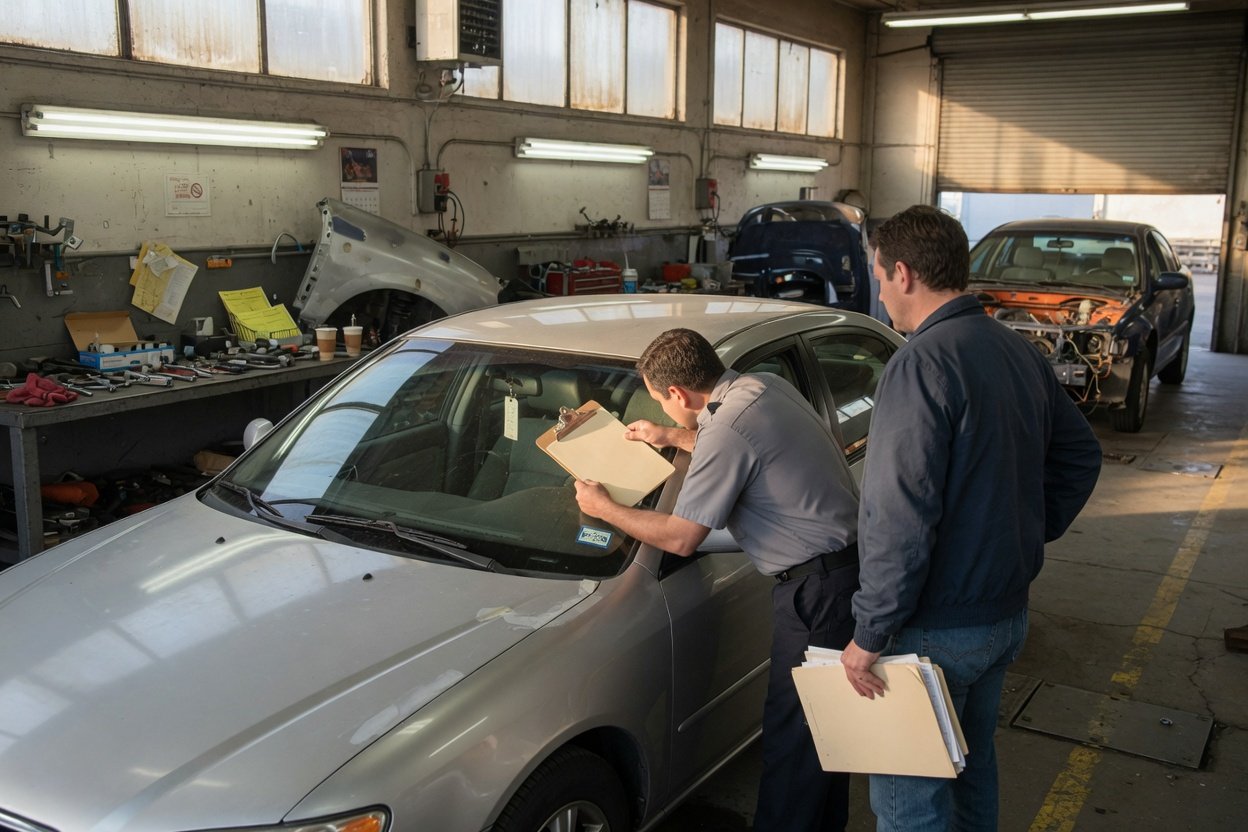
Before a salvage vehicle goes back on the road, most states want to inspect it. What they look for, the paperwork they ask for, and how to pass the first time.
You bought a salvage-title car, you fixed it, and it's ready to drive. In most states, it can't legally go back on the road until it passes a rebuilt-title inspection and gets a new title branded "Rebuilt" (or "Reconstructed," "Revived," or similar, depending on the state). Here's what to expect.
People assume a rebuilt inspection checks the quality of the repair. In many states, it doesn't, or not much. The main purpose is anti-theft: making sure the vehicle and the parts on it aren't stolen.
That's why the paperwork matters as much as the car. Some states add a safety inspection on top: brakes, lights, tires, horn, seat belts, airbags.
Rules vary a lot by state. Always check your state DMV (or the agency that handles titles) before you start the repair, not after.
Major parts often carry their own VIN or part numbers. Many states want to know where they came from:
Where states require a safety check, expect:
This is where most people get stuck. Typical requirements:
Private-party used parts with no paperwork, or parts from a friend's car, can stop your inspection cold.
You'll get a new title branded rebuilt. That brand stays with the vehicle permanently, and it affects resale value and insurance. See salvage vs. rebuilt title for what that means when you sell.
Some vehicles can't be rebuilt at all. Many states have a "non-repairable," "junk," or "parts only" title that means the vehicle can never be titled for the road again. Check the title type before you bid. See reading a Copart listing.
It's a little paperwork, but it's what separates a car you can sell from a car you can only part out.
Your project car sits until spring: how to store it right, move paint and body work indoors, and do bench work that doesn't need the car.
Hail-damaged trucks and collision trucks both end up at salvage auctions. What each kind of damage costs to fix, what you can't see in the photos, and which tends to be the…
Sometimes a wreck is worth more in pieces. How to price an auction car as a parts donor, what actually sells, and the costs that turn a parts car into a loss.