Auction Buying
What a Quick Walk-Around at the Auction Yard Can't Tell You
A quick yard walk-around can't show how a car runs, its frame, flood damage, or wiring. Here's what to check before you bid.
Late-model deer hits need sensor calibration. Learn what it costs, which parts add up, and what to check before you bid.
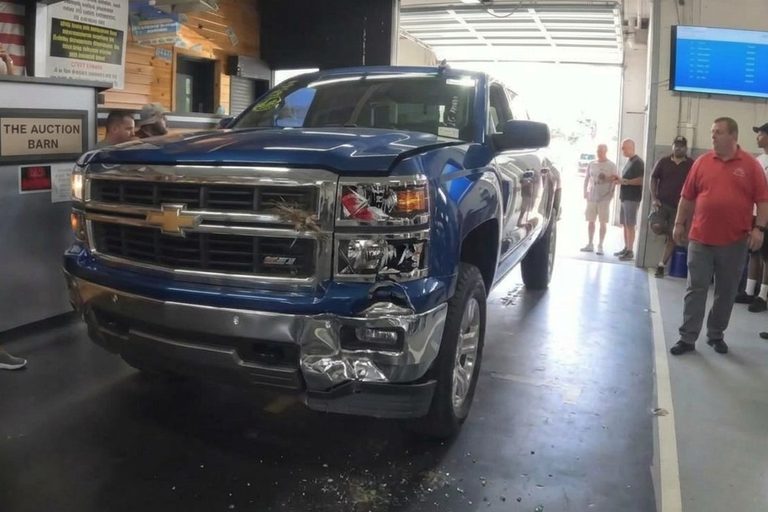
You're scrolling the auction lane on a fall evening and find a two-year-old pickup with a dinged hood, a smashed grille, the bumper cover pushed in and the note "animal strike." It looks like a light repair. On a late-model truck, though, that grille may have a radar behind it. Here's the short answer. The calibration line by itself usually runs a few hundred dollars, up to around $700. What wipes out your margin is everything that comes along with it: a new radar, a camera, scans, alignment, glass and longer repair time.
Start with the line item itself. CCC, whose software writes a big share of insurance estimates, says average calibration fees nearly doubled in five years and now run about $500 on claims that include one. Mitchell's estimating data puts the average at $688 on 2025 estimates that had a calibration line. The two companies count differently, so treat these as a range, not a price. Your number depends on how many systems need aiming and whether a sensor is being replaced. These lines are everywhere now. Mitchell found calibrations on 34.7% of repair estimates in 2025, up from 12.1% in 2022.
The bigger numbers come from stacking. In December 2023, AAA priced a minor front collision on a 2023 Ford F-150, a 2023 Nissan Rogue and a 2023 Toyota Camry, each with every driver-assist option. The full repair averaged $11,708.29. Replacing and aiming the driver-assist parts was $1,540.92 of that, or 13.2%. Those are new factory parts at list price plus labor, priced at 2023 rates.
You may have seen AAA's headline that driver-assist work is "over a third" of repair costs. That 37.6% is the average across four scenarios, including a side mirror where the camera was 70.8% of the job. On a front-end hit like a deer strike, the share was 13.2%. So expect a deer hit to cost more because of the sensors, but don't expect the sensors to be most of the bill.
AAA's ranges for driver-assist work on top of normal bodywork:
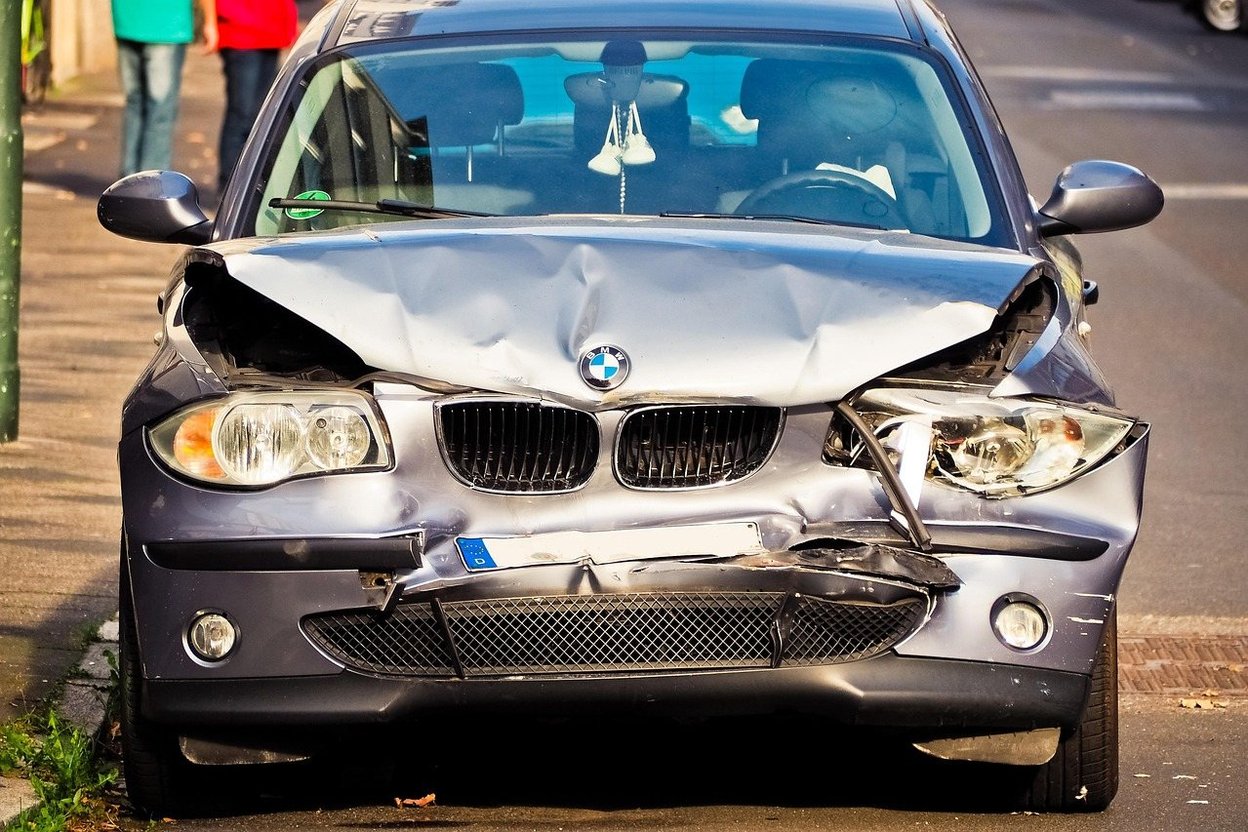
A deer hits the front fascia, the emblem, the grille and the bumper corners. A big one can come over the hood into the glass. On a late-model vehicle, that's where the sensors are:
The same front end doesn't carry the same parts on every truck, either. Of AAA's three test vehicles, Toyota used a grille-mounted ultrasonic sensor as an input for adaptive cruise, and Ford and Nissan didn't.
These hits are common, which is why the auction lanes fill up with them every fall. State Farm estimates more than 1.6 million U.S. animal-collision claims from mid-2025 to mid-2026, mostly deer. National odds were 1 in 145. In West Virginia they were 1 in 46, and Pennsylvania alone had about 141,000 estimated claims. Animal crashes also kill people. IIHS counts 210 deaths in 2024 in crashes where the first impact was an animal (any animal, not only deer).
On the insurance side, State Farm says hitting the deer is usually a comprehensive claim. If you swerve, miss it and hit a guardrail, that's likely collision.
This part catches people. You don't need a smashed radar to need a calibration. On many vehicles, pulling the bumper cover or grille to fix the "cosmetic" damage is enough to require one.
I-CAR, the collision-repair training group, says most makers require calibration after a radar or forward camera is removed. Some also require it when the part holding the sensor, or a part next to it, comes off.
There are two ways to aim these systems:
Some vehicles need both. Only that vehicle's procedure tells you which.
When you price a deer hit, budget for more than the aiming:
Parts aren't getting cheaper. Mitchell says factory parts prices rose 4.21% in 2025, and plastic parts like bumper covers and headlamps went up faster than sheet metal.
Many shops can't aim every system themselves. They send it out to a mobile tech or a dealer, and price and wait time vary. CCC found that only about 45% of calibrations make the first estimate. The rest get added later as supplements once the bumper is off. Repair time grows too. In 2024, one calibration added roughly three days to a direct-repair job, and more than one added about 5.5 days.
CCC's numbers also show how quickly a cheap repair stops being cheap:
The insurer's estimate is new factory parts at list price, shop labor, and every aim the maker calls for. AAA's study used $75 an hour for body labor and $110 for mechanical, and those are 2023 rates. CCC says calibrations were on 28.3% of repairable estimates in 2025, the average repairable job was $4,818, and total losses hit a record 23.1% of claims.
Your yardstick is different. It might be a bumper cover, a used headlight, one calibration and a cheap local mechanic. The auction discount lives in the gap between those two ways of measuring. My rough rule: auction price is about a third of market, and once it's fixed, the truck costs about half of what a clean one would.
That gap disappears if the radar has to be replaced or the mount is bent. The equipment is spreading, too. In 2016, 20 automakers committed to make automatic braking standard by September 1, 2022 on vehicles at or under 8,500 pounds gross weight, and by September 1, 2025 on trucks from 8,501 to 10,000 pounds. Federal standard FMVSS 127 makes it required on light vehicles by September 2029. Read the door sticker to see which side of that weight line a truck falls on.
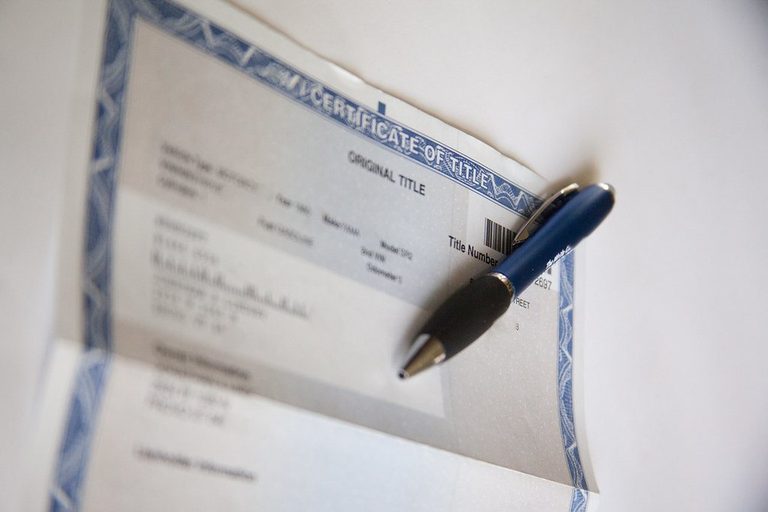
Whether a repair estimate brands the title is set by state rules. Usually that's a percentage of value, or repair cost plus salvage compared with value. Check your state.
- Confirm the build, not the model year. Trim and option packages decide which sensors are on the truck. Decode the VIN and look at the photos. - Look closely at the emblem, the lower grille, the bumper corners and the windshield. A cracked emblem can mean a cracked radar behind it. - Don't take a clear dash as a pass. No light doesn't mean no aiming needed. - Read the estimate if there is one. Is the calibration already on it? If not, plan on it showing up as a supplement. - Get proof. If you pay someone to aim the systems, get a printout or written proof it was done. AAA tells drivers the same thing. - Walk away when: - the radar bracket is tweaked - the core support has moved - a lift kit or aftermarket grille has pushed the radar out of the height range the procedure allows
A calibration can't fix a mount that's out of spec.
Last, think about who drives it next. A truck with automatic braking that works but is aimed wrong can brake late, brake early or not brake at all. If you sell one like that, expect it to come back to you. I'd rather pass on a deer hit than sell one I can't stand behind. With Thanksgiving coming and deer moving, there will be plenty more in the lanes next week.
Photo by 652234 on Pixabay.
A quick yard walk-around can't show how a car runs, its frame, flood damage, or wiring. Here's what to check before you bid.
Copart lost your title and the DMV rejected your bill of sale? Here's what to ask for, what to get in writing, and the backup routes.
A Copart 'Front End' label doesn't say what hit the vehicle. Get the photo clues, the hidden deer-hit damage, and how to size the repair before you bid.