Golf Carts
Buying Golf Carts at Auction: What to Check
Golf carts show up at salvage auctions, equipment auctions and course fleet sales. Gas vs. electric, the battery question, what fails, and how to price a cart to flip.
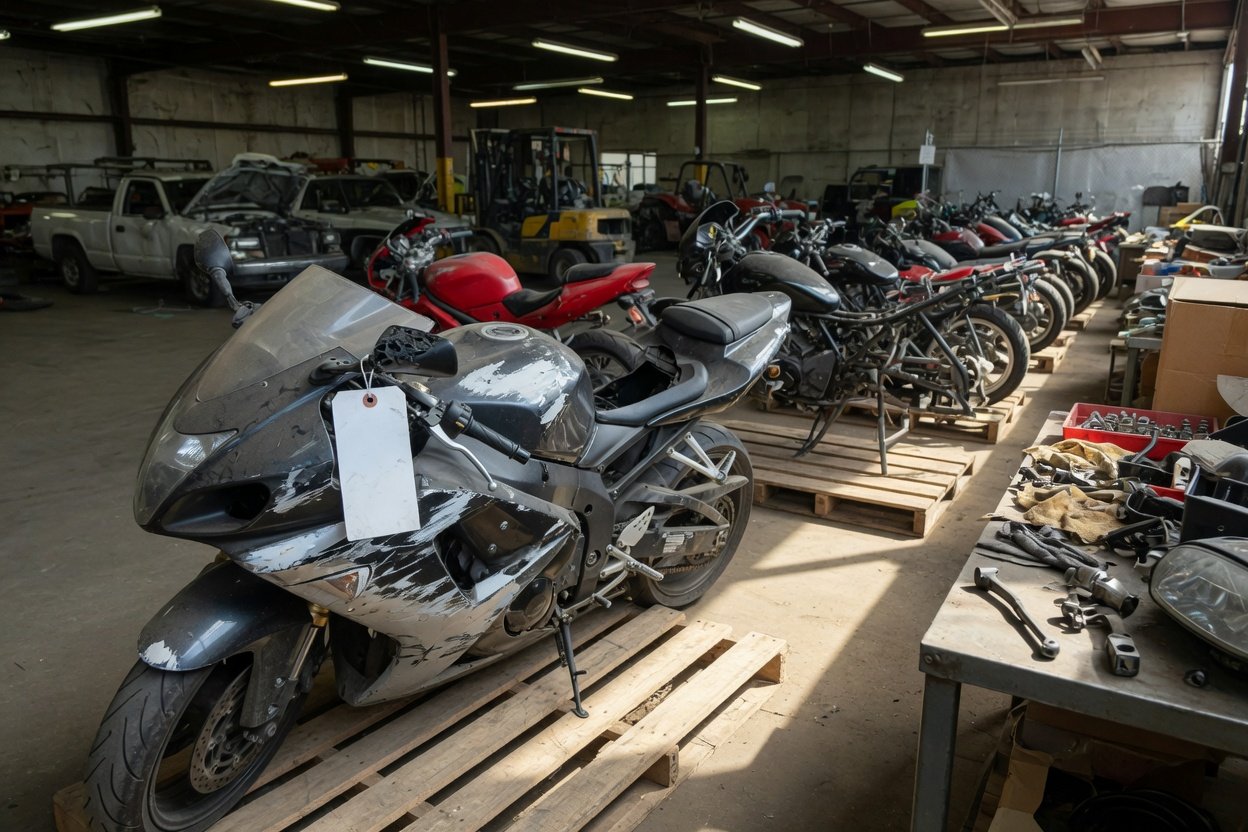
Salvage motorcycles are cheap, light and easy to bring home. What usually breaks, how to spot a bent frame or forks, theft recoveries, and what to check before you bid.
Motorcycles show up at Copart and IAA every day: crashes, theft recoveries, and bikes that tipped over in a garage. They're cheap compared with cars, you can haul one home in a pickup or on a small trailer, and parts are easy to find. They're also easy to get wrong, because a bike that looks like it just needs a mirror can have a bent frame.
Insurance companies total motorcycles easily, because plastic fairings and parts add up fast on a vehicle that isn't worth much to begin with.
The frame is everything. A bent frame usually means a parts bike.
Stolen bikes are often recovered with:
A new ignition and keys can mean a new ignition switch, gas cap and seat lock, or a reprogrammed immobilizer on newer bikes. Price it in.
Find out what the bike is worth fixed. Then price the parts: used OEM parts from eBay and bike salvage yards are cheap for popular models. Add up fairings, forks, wheels and anything electrical. Subtract that, plus fees and transport, plus your profit, and that's your maximum bid. See pricing a salvage flip.
Popular models with lots of parts available (Harley-Davidson cruisers, big Japanese sport bikes and standard bikes) flip best because buyers want them and parts are everywhere. Rare and high-end European bikes can have expensive parts.
A dropped cruiser with scratched chrome and a bent lever can be one of the best deals at auction. A sport bike with a bent frame is usually a parts bike, no matter how cheap it looks.
Golf carts show up at salvage auctions, equipment auctions and course fleet sales. Gas vs. electric, the battery question, what fails, and how to price a cart to flip.
Sometimes a wreck is worth more in pieces. How to price an auction car as a parts donor, what actually sells, and the costs that turn a parts car into a loss.
Bidding with your gut is how people overpay at salvage auctions. A one-page sheet to fill in before every bid, working backward from what the car is worth fixed.