Auction Buying
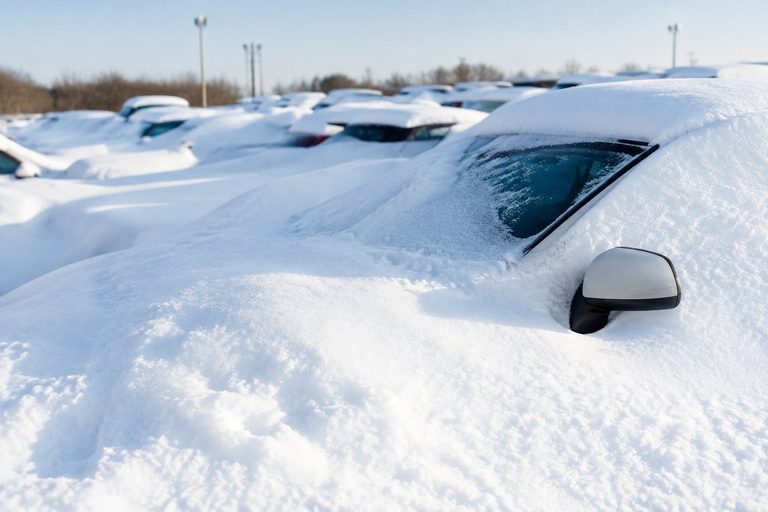
How Do You Inspect a Snow-Covered Auction Car You Can't Clear Off?
Snow hides most of an auction car's damage. Here's what you can still check at the yard, what to skip, and when to walk away.

Dealers send unsold trucks to auction in late fall. Here's who can bid on clean-title lots, what fees apply, and how to set a max bid.
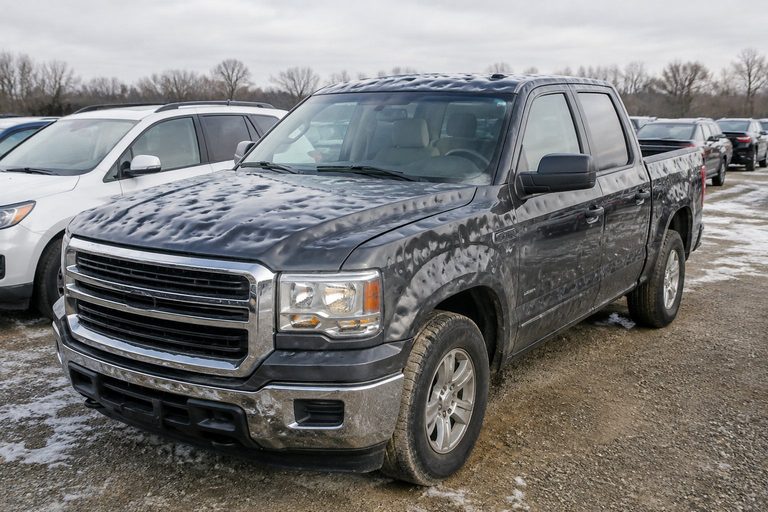
You've sat at the dealership while they "appraise" your trade, holding your keys, and you watched the truck you wanted on the lot priced like it was new. Here's what happens to that lot later in the year. Trucks that didn't sell get sent to auction. These are clean-title trucks, mixed in with the wrecks at Copart and IAA. My read is that November is a good month to watch for them. That's my opinion, not a proven pattern. Wholesale truck prices are falling right now, but most clean-title lots need a license to bid.
Every dealer has trucks that sat too long. Every unit on the lot ties up money, and an aging one keeps losing value while it sits there. At some point the dealer stops waiting for a retail buyer and sends it to auction. Fleets do the same with trucks they're cycling out. That's a dealer dump. It isn't a damaged vehicle. It's a vehicle somebody wanted gone.
Copart sells for insurers, banks, finance companies, dealers, rental companies, fleet operators and individuals. It mostly works on consignment, so the seller owns the vehicle until it sells. So when you scroll past the hail trucks and the flood cars, you'll also see clean-title trucks with nothing worse than worn tires and a check-engine light.
Now the November part. I have no hard data showing dealers dump more trucks in November than in any other month. Here's why I'd still watch for it. Wholesale prices are softening this fall, and a dealer holding a truck that loses value every week has a reason to cut it loose before year-end instead of carrying it into winter. That's my expectation. Watch the listings yourself from Halloween through Thanksgiving and see whether your area shows it.
This part has numbers behind it. Cox Automotive's Manheim Used Vehicle Value Index, the standard measure of wholesale used prices, fell to 205.9 in September 2026. That's down 1.1% from August and 0.6% below September 2025, the first full-month year-over-year drop of 2026. Cox's chief economist called the depreciation "steeper than we typically see this time of year."
Trucks are part of that. Cox says pickups, SUVs and midsize cars kept trending down in September. It points to fuel costs and rising interest rates hurting bigger, thirstier vehicles. (EVs, for the record, were up 4.3% year over year.)
Inventory is backing up too. Wholesale days' supply was 28 days, up 2.4 days from a year earlier. Sales conversion, meaning the share of vehicles offered that actually sell, was 55.2%. That's 1.9 points below the three-year September average. More trucks are sitting, and fewer are selling on the first try. Cox also cut its year-end outlook to about 0.2% growth, down from 2% in July.
For you, that means a falling market for trucks. It doesn't guarantee a cheap one. Nobody can tell you how much lower pickups go by November. A clean-title truck also won't come anywhere near my usual rule for wrecks: about a third of market at auction, about half of a clean one once it's fixed. You're paying for no damage. Still, softer prices and more supply mean fewer bidders chasing each truck, and that helps.
This is where most first-timers get stuck. You find a clean-title half-ton with low miles, go to bid, and the button is grayed out.
Copart and IAA mostly reserve clean-title lots for licensed buyers, meaning a dealer license or the right business license. Each site's rules come from the state where the vehicle sits. Copart keeps a licensing page for each state. Virginia's, for example, says that without a business license you need a broker to bid on clean and salvage titles there. It also says dealers and dismantlers have to provide an operational license and a sales tax license for the same address, plus sales tax exemption forms.

If you don't have a license, the usual route is a broker. A broker is a licensed business that lets you bid under its credentials for a fee. Copart points unlicensed buyers toward brokers. Shop around, because fees and terms vary, and read exactly what the broker charges per vehicle before you register.
What you can bid on depends on where the truck is located, not just where you live. A truck two states over may be open to the public while the same model down the road isn't, or the other way around. Before you register anywhere:
Don't take any forum post's word for it, including mine. Read the page for your state.
The hammer price is just the starting number. People lose money at auction by bidding right up to their limit and then getting hit with fees, a shipping bill and storage.
IAA's new fees took effect October 1, 2026. Here's what IAA lists:
IAA's standard fee schedule covers business-licensed buyers who bought 24 or fewer units, or less than $75,000 in vehicles, over the past 12 months. That's most of us. There are separate internet and proxy bid fees on top of that, so look up the full schedule before you bid.
Then there's storage. IAA tells you to check with the local branch for per-day storage fees, and Copart's terms vary too. The number of free days isn't the same everywhere. Read the terms on the lot you're bidding on. Ask whether weekends and holidays count toward your free days. With Thanksgiving on November 26, a truck you win the Monday before can sit a lot longer than you planned.
Here's how I set a max bid:
What's left is your max bid. Stop there.
That's how you skip the dealer markup. Let someone else send their trucks to auction, and buy the good one before they mark it up on the lot.
Photo: VW T2/68 double-cab bay window pickup DSC_0070 by wbaiv, BY-SA 2.0.
Snow hides most of an auction car's damage. Here's what you can still check at the yard, what to skip, and when to walk away.
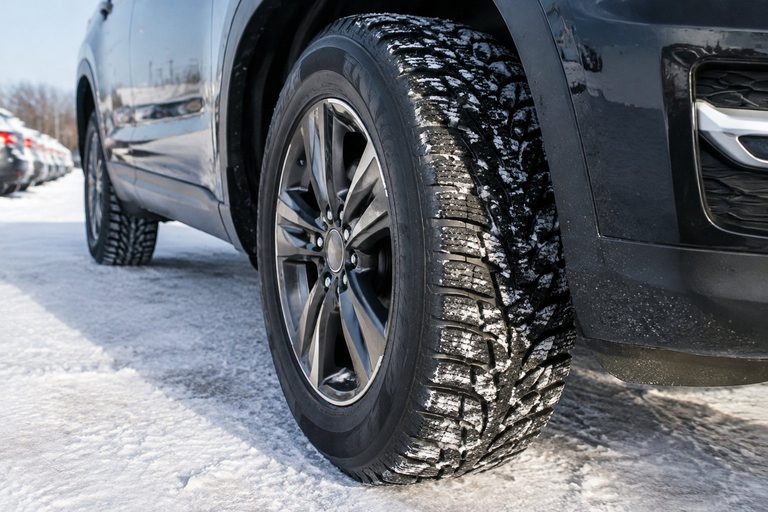
Mismatched tires on an auction AWD car can strain the drivetrain and cause uneven grip. Here's what to check and price before you bid.
Find out whether a December auction purchase counts toward your state's sales limit this year or next, and how calendar and rolling rules differ.