Auction Buying
How Do You Inspect a Snow-Covered Auction Car You Can't Clear Off?
Snow hides most of an auction car's damage. Here's what you can still check at the yard, what to skip, and when to walk away.
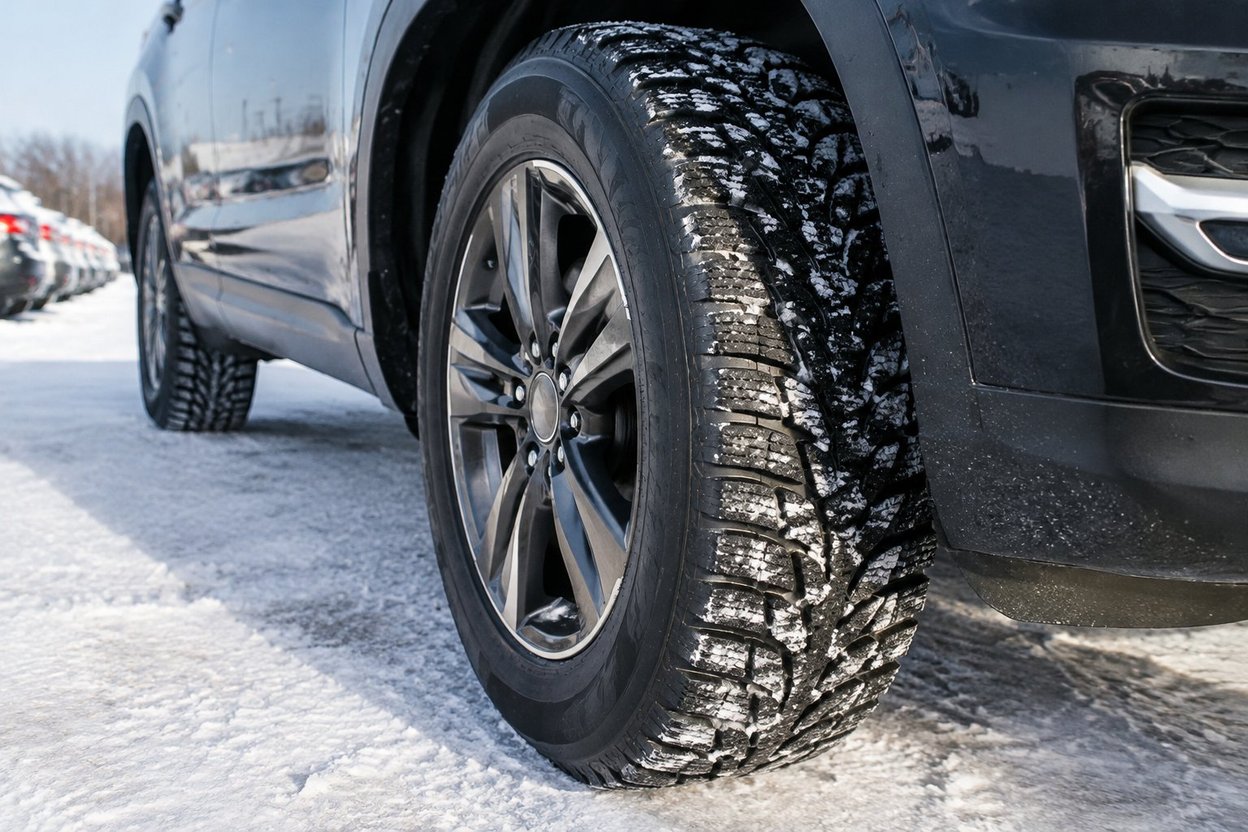
Mismatched tires on an auction AWD car can strain the drivetrain and cause uneven grip. Here's what to check and price before you bid.
It's fall, the first cold snap is coming, and you're scrolling auction listings at night. You find an all-wheel-drive car with light body damage at a good price. Then you zoom in on the photos: two winter tires and two all-seasons, or four tires from four different brands. Can that hurt the drivetrain? Yes. Tires that roll at different circumferences can strain AWD parts and damage the driveline. But a mismatch doesn't prove the damage has already happened. Here's how I sort it out before I bid.
Here's the plain version. On an AWD car, all four wheels are tied together through the drivetrain. If one tire's rolling circumference is different from the others, it turns at a different speed over the same distance. The AWD system has to absorb that difference the whole time you drive. Tire Rack explains that this can strain AWD components and may damage the driveline. Ford's owner's manual for an AWD model carries a warning on the same subject.
That's a risk, not a verdict. Mismatched tires on a lot photo don't tell you the transfer case is gone. How much harm they can do depends on the exact sizes involved and on how that particular AWD system is built.
Winter tires add a second, separate problem. If they grip differently than the tires on the other axle, the car can handle unevenly even when the sizes are close. So you're looking at two things: what the setup might have done to the drivetrain, and whether the car is safe to put on a snowy road.
I price the tires before I call the car a bargain. A cheap car can stop being cheap fast once you add four tires and a tow.
Matching numbers on the sidewall feel like they should end the question. They don't. Rolling circumference is the distance a tire covers in one full turn. Two tires labeled with the same size can still come out different because of:
You'll see plenty of blanket rules online, like "every AWD car has to be within a certain tread depth." There is no single number that fits every AWD vehicle. Ford's manual shows why. For the system it covers, Ford explicitly allows new and worn tires to be mixed as long as they're the original tire size. Other makers want the tires matched much more closely. The only rule that holds up is the one in the manual for that exact car.
Also, don't call a setup mismatched just because the front and rear tires are different sizes. Some cars come from the factory that way. Michelin's guidance and BMW's service bulletin both treat manufacturer-approved staggered sizes as the correct fitment. Check what the car shipped with before you decide anything is wrong.
Say the sizes do line up. Winter tires still belong on the car as a full set of four. Michelin and Bridgestone both say to put them at every wheel position. Winter tires on only one axle leave you with more traction at one end of the car than the other, and that makes the car harder to control on a slick road.
Mixed brands and models cause a milder version of the same thing. Two tires can be the same size but have different tread patterns and behave differently when you brake or turn. So a set can be close enough in size not to fight the drivetrain and still give you uneven grip.
Keep the two concerns separate. Drivetrain strain comes from size differences. Uneven grip comes from different tire types. A car showing up with two winter tires and two all-seasons doesn't mean the AWD system is wrecked. It means the setup isn't right for winter driving, and you should budget to fix it.
Build a simple worksheet. BMW publishes a tire inspection form that records the brand, tire model, DOT number, tread depth, and circumference at each wheel position. That's a good model for an auction car. For each tire, write down:
Then compare what's on the car with the tire placard in the door jamb and the owner's manual for that exact year and model. NHTSA and Michelin both say the placard and the manufacturer's instructions should guide tire choice and inflation, not whatever the last owner happened to put on.
Getting that information takes some planning. Copart's published preview guidance bans tools, including diagnostic readers, and bans test drives. That page is older, so call the yard and ask what inspections they allow right now. You may be able to get readable sidewall photos and real tread measurements through an approved inspection service or by previewing in person. Ask before auction day, not after.
Copart's terms say vehicles are sold as-is, with no promise that they're mechanically sound or roadworthy. You're also responsible for getting the car off the lot safely and legally.
If you can't get the measurements, count the unknown as a cost. Assume a full set of correct tires and a transport bill, and bid as if you'll be paying both.
Maybe the listing shows four new tires and no warning lights. That's better, but it doesn't settle anything.
BMW has a service bulletin for some xDrive models that describes a shudder at low speed when turning or accelerating, with no warning messages on the dash. It lists uneven or incorrect tires as one possible cause. It lists transfer-case oil that isn't to spec as another. The same bulletin also warns that new tires don't rule out a problem that started while the old tires were on the car.
So clean tires don't prove the drivetrain is healthy. And since the bulletin names more than one cause, a shudder by itself doesn't prove the transfer case has failed either. It could be the tires, the fluid, or something else. A shop that knows that make of car needs to diagnose it. That's where my cheap local mechanic earns his money.
If you can't confirm the tires are right or that the car is roadworthy, don't plan on driving it home. Ship it. A tow costs less than guessing.
Once you know what's on the car, you have three realistic fixes:
Whichever you choose, follow the manufacturer's requirements for that car, not a forum rule of thumb.
Then get real numbers before you bid. Get an installed quote for the correct tires, with the car's year, make, model, and trim. Get a transport quote from the yard to your place. Add both to your maximum bid. My rough rule is that auction price runs about a third of market. That margin disappears quickly if you skip the boring math.
And keep your expectations honest. New tires fix the tire problem. They don't promise to undo damage that's already been done to the drivetrain. If the car has a shudder or a whine after the tires are right, that's a separate repair, and you need a quote for that specific vehicle.
It's the same work a dealer does on a trade-in. You're just doing it yourself and keeping the markup. Do it before the auction, ideally while the snow's still a month or two out.
Snow hides most of an auction car's damage. Here's what you can still check at the yard, what to skip, and when to walk away.
Find out whether a December auction purchase counts toward your state's sales limit this year or next, and how calendar and rolling rules differ.
Buying at auction in December to fix over winter? Learn when it pays, the cold-weather repair limits, and the title rules that set your timeline.